


MCT: The Powerful Solution to Piglet Diarrhea, and a Highly Efficient Energy Source!
Weaned Piglet Diarrhea: A Major Headache for Many Livestock Farmers — It not only affects piglets' growth but also increases breeding costs. Is there a magic solution that can both solve the diarrhea problem and provide highly efficient energy for piglets? Today, let’s explore this all-around performer — medium-chain triglycerides .

NO.01 MCT: A "Direct Fast-Energy Channel" for Piglets
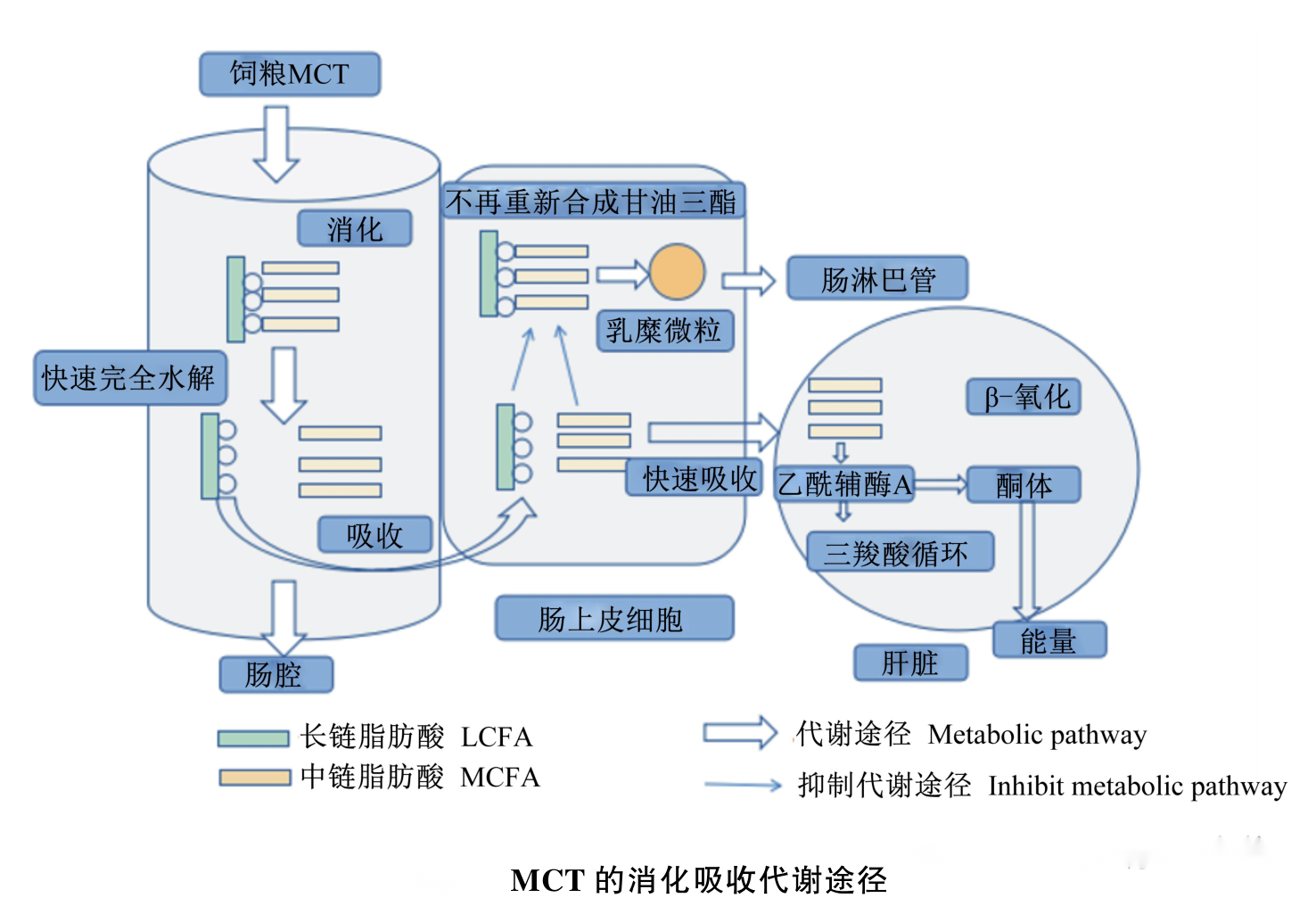
MCT consist of fatty acids with a carbon chain length of 6–12 carbon atoms (e.g., caproic acid, caprylic acid, capric acid, etc.). Compared with the common LCT, its digestion and absorption pathway can be described as "taking a shortcut"!
Exceptionally fast digestion and absorption: In the gastrointestinal tract, MCT can be rapidly hydrolyzed by gastric lipase and pancreatic lipase. The resulting MCFA can be directly absorbed by intestinal epithelial cells and transported to the liver for metabolism via the portal venous system. In contrast, after LCT is hydrolyzed, it must first be "reassembled" into chylomicrons in intestinal cells before being transported through the lymphatic system. For piglets with underdeveloped digestive functions, this "direct absorption" means energy can be quickly utilized—truly a "timely boost"!
Remarkably high energy density: Studies have shown that MCT exhibits excellent performance in indicators such as metabolizable energy. Even with energy loss, its net energy value can reach 6.97 kcal/g. For piglets in rapid growth with high energy demands, this is undoubtedly a "powerful energy pack".
NO.02 MCT: The "Terminator" of Weaned Piglet Diarrhea
Weaned piglet diarrhea has many causes, with insufficient fat absorption being a key factor — after weaning, piglets have low lipase activity and insufficient bile secretion, making long-chain fats difficult to digest and prone to inducing osmotic diarrhea.
1.Easily Address the Challenges of Fat Digestion and Absorption
MCT is less dependent on bile salt emulsification and pancreatic lipase hydrolysis. Even with weak digestive capacity, piglets can absorb it efficiently
The bioaccessibility of MCT is as high as 85%, far exceeding that of corn oil, olive oil, and palm oil . This means it can be more fully utilized by the piglet digestive system, greatly reducing the risk of diarrhea caused by undigested fats.
2.Regulate Intestinal Flora and "Eliminate" Pathogenic Bacteria
MCFAs in MCT, such as caprylic acid (C8) and capric acid (C10), are "natural enemies" of pathogenic bacteria like Escherichia coli and Salmonella, yet "friendly" to beneficial bacteria such as Lactobacillus. By regulating the balance of intestinal flora, MCT can fundamentally reduce the incidence of diarrhea. For example, studies have shown that adding MCT to the diet of post-weaning piglets can optimize the intestinal microbial environment and improve the feed conversion ratio .
3.Strengthen the Intestinal Barrier and Resist Stress-Induced Damage
Weaning stress can leave the piglet's intestinal barrier "full of loopholes," increasing the risk of diarrhea. MCT can improve the integrity of intestinal epithelial cells, acting like a "protective armor" for the intestines to help piglets resist the invasion of pathogenic microorganisms.
NO.03 "Hidden Buffs" of MCT in Piglet RearingBeyond anti-diarrheal effects and energy supply
MCT offers numerous surprising benefits:
Growth Performance Boost: Thanks to efficient energy utilization and improved intestinal health, piglets fed with MCT typically achieve higher average daily gain and better feed conversion ratio.
Smooth Transition Through Weaning Stress: Weaning is a major challenge for piglets. As an easily digestible energy source, MCT helps piglets smoothly navigate the feed transition period, reducing issues like decreased feed intake and growth stagnation.
High-Quality Alternative to Antibiotics: Amid the global trend of "antibiotic-free farming," MCT’s antibacterial properties come into full play. Studies have shown that it can replace antibiotics such as colistin sulfate, improving piglet growth and intestinal health while reducing drug dependence.
Conclusion: MCT – The "Ace Player" in Piglet Nutrition
With its unique digestion and absorption pathway, efficient energy supply, and multiple benefits for intestinal health, MCT hold great potential in piglet feed. While further research is needed on its specific application dosage and synergistic effects with other feed ingredients, there’s no denying that MCT is a "reliable ally" in alleviating piglet diarrhea and promoting healthy farming.
- END -