


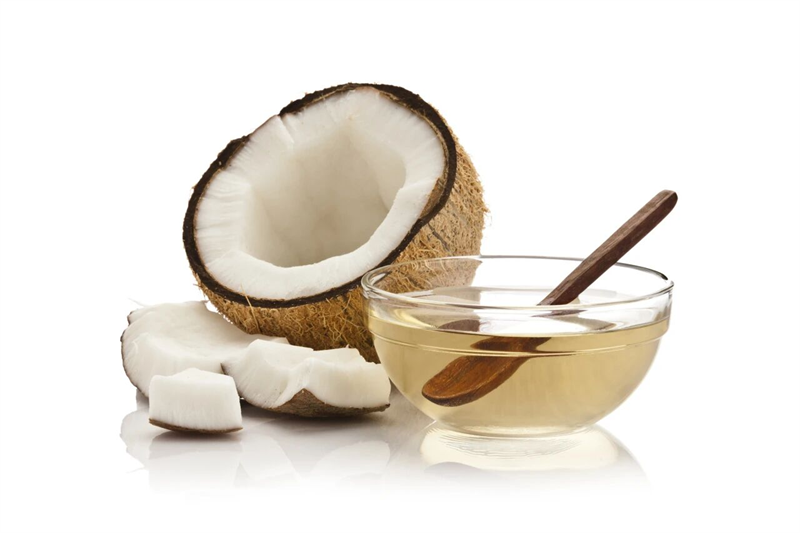
Virgin Coconut Oil: More Than Just a Viral Oil
Every time you scroll past virgin coconut oil, are you always drawn to its soothing coconut aroma, yet can't help wondering: "Is this really nutritious, or just a viral gimmick that’s only good for photos?"In fact, many people are misled by the "viral" label. Virgin coconut oil has stayed popular for years not because of its looks, but thanks to the nutrients locked in by cold-pressing technology and the long-misunderstood advantages of its "saturated fats." Today, we’ll break down its "proof of being a powerhouse"—after reading, you’ll know how to choose and use it.
1. First, Understand: Virgin vs. Refined—The Gap Is More Than Appearance
Many people buy coconut oil based solely on price, but "virgin" and "refined" differ in a complete set of nutrients. The core difference lies entirely in the processing technology:
Virgin Coconut Oil: Like making fresh juice, extracting the "first sip of nutrition"
It’s made by directly cold-pressing fresh coconut meat, without adding extra chemical solvents or high-temperature refining. This fully retains the coconut aroma, phenolic antioxidants, and vitamin E in the coconut meat. The pressed oil has a rich coconut scent, a pale yellow or amber color, and a fresh coconut sweetness when smelled closely.
Refined Coconut Oil: Like making concentrated juice, most nutrients are "filtered out"
It uses dried coconut meal (not fresh coconut meat) and undergoes high-temperature refining, bleaching, and deodorization. The final oil is pale white with almost no coconut aroma, and most antioxidants are lost during processing, leaving only pure fat. Although cheaper, compared to virgin coconut oil, it’s like "plain water vs. fresh coconut juice."
2. Don’t Panic! Its "Saturated Fats" Are Not What You Think
"A whopping 90% saturated fat content—eating it will make you fat and clog your arteries"—this is the most common criticism of coconut oil, but the truth is "not all saturated fats are the same."
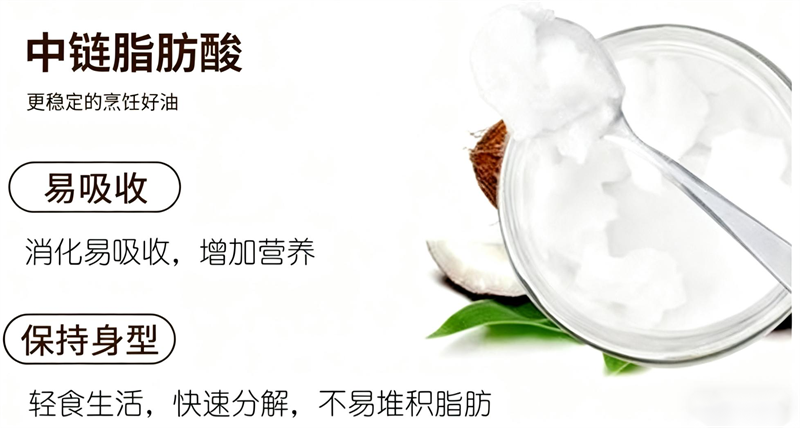
Over 60% of the saturated fats in virgin coconut oil are medium-chain triglycerides (MCTs), which are completely different from the long-chain fatty acids in pork and butter:
Fast metabolism: MCTs don’t require complex breakdown in the liver. Once consumed, they’re quickly converted into energy for the body and brain, and are less likely to accumulate in the abdomen like long-chain fats.
Doesn’t clog arteries: Multiple studies, such as experiments in The American Journal of Clinical Nutrition, have shown that moderate consumption of virgin coconut oil doesn’t raise "bad cholesterol" (LDL); instead, it increases "good cholesterol" (HDL), helping the body metabolize excess fat.
1-2 spoons (about 10-20ml) per day for adults is enough—add it to coffee or salad dressing to supplement energy without burdening the body.
3. Three Scenarios Where "Only Virgin Will Do"—Use It Right to Avoid Waste
The advantages of virgin coconut oil are most obvious when used in suitable scenarios:
Add 1 spoon to breakfast: Stay full for 4 hours, stay more alert
Scoop 1 spoon (about 10ml) of virgin coconut oil into hot coffee or milk, blend for 10 seconds with a mixer, and it becomes a creamy milk cap-like drink. After drinking, MCTs provide quick energy—you won’t need frequent snacks in the morning, and you’ll be less likely to get distracted at work.
Replace butter in baking: Less sugar, still fragrant, no greasiness
When making cookies, muffins, or chiffon cakes, replace 1/2 or all of the butter with virgin coconut oil. For example, if the recipe calls for 100g of butter, use 80g of virgin coconut oil (coconut oil has a lower density, so reduce the amount). The baked treats will have a light coconut aroma, a refreshing texture, and won’t feel greasy even if you eat more. Plus, coconut oil contains no lactose, making it suitable for lactose-intolerant people.
Use as a "natural face cream" for skincare: Rescue dry skin in autumn and winter
When your skin peels or lips crack in winter, take 1 small drop of virgin coconut oil, rub it between your palms to warm it up, and apply it to dry areas. It absorbs quickly and won’t be as greasy as petroleum jelly. I’ve tried using it as hair oil—apply a little to the ends of semi-dry hair after washing, and your hair will be smooth the next day with a faint coconut scent.
4. Pitfall Avoidance Guide: 3 Labels to Pick "Genuine Virgin Coconut Oil"
Many coconut oils on the market are marketed as "extra virgin" but are actually "semi-refined". Here are 3 key labels to check:
1. Check the production process: Choose "Cold Pressed"
Only oils labeled "Cold Pressed" are true extra virgin oils processed at low temperatures. If it says "Refined" or no process is specified, skip it entirely.
2. Check the raw material: Prioritize "Organic Coconut"
Organic coconuts are grown without pesticides, avoiding heavy metal residues. Especially for the elderly and children, opt for organic versions whenever possible.
3. Check the texture: Solid at room temperature, melts when heated
Extra virgin coconut oil has a melting point of around 24℃. It turns liquid in summer and solidifies into a white solid in winter—this is normal, not spoilage. If it stays liquid at room temperature, it may be blended with other oils.
Final note,Extra virgin coconut oil isn’t a "miracle oil," but it’s far from an "internet-famous gimmick." It’s more like a "versatile all-rounder"—it works as a nutritional supplement, a kitchen seasoning, and a natural skincare product.
Next time you see it, try adding it to your coffee or baking cookies. You might find that this "viral oil" can be surprisingly practical.